

Case Study
Automated Operational Reporting for Logistics
Operational reporting was dependent on manual consolidation, limiting visibility and slowing decision-making across logistics operations.
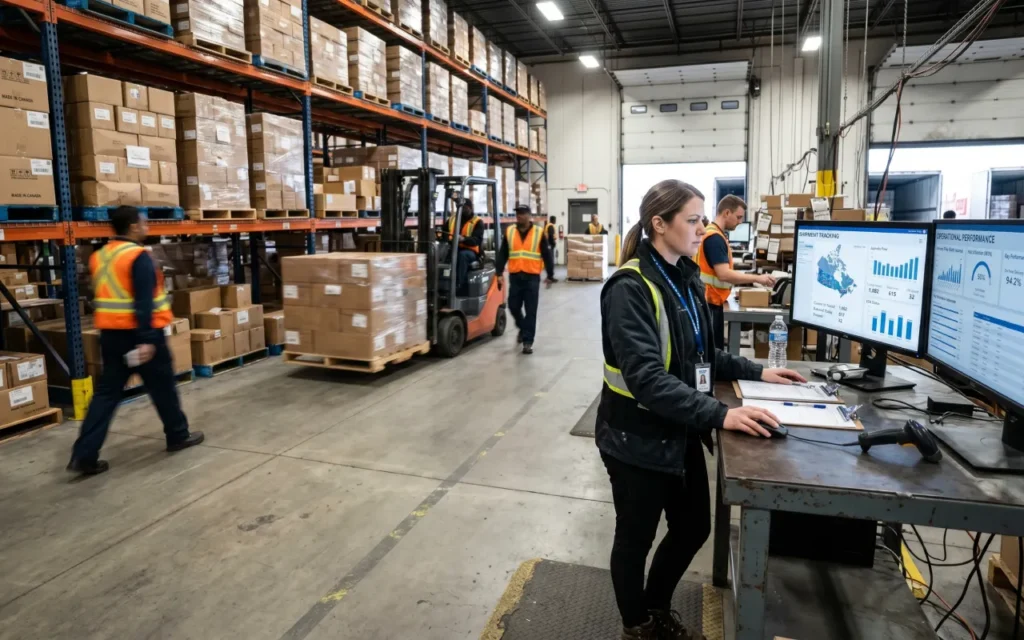
The organization needed improved operational visibility, more consistent reporting discipline, and a practical way to support faster decision-making across logistics operations.
The engagement focused on understanding operational constraints, aligning key stakeholders, and translating reporting challenges into a structured execution roadmap.
Challenge
The operating problem that needed a practical response.
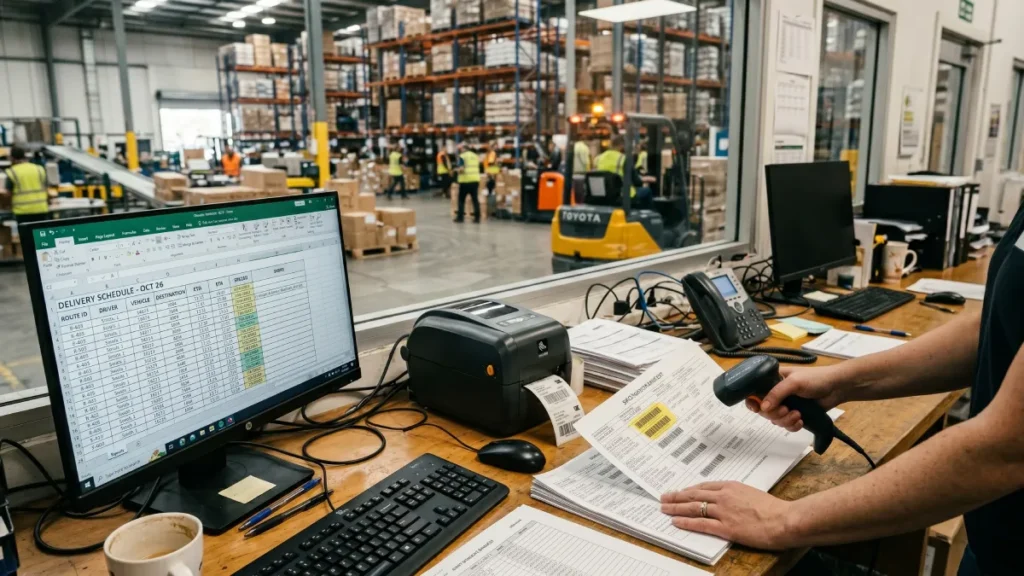
The logistics operation was struggling with delayed and inconsistent reporting across multiple distribution points, making it difficult to understand real-time performance.
Operational teams were working in silos, with different systems and manual processes used to track shipments, delays, and delivery status, resulting in fragmented operational visibility.
Leadership decisions were often based on outdated reports that did not reflect current conditions on the ground, limiting responsiveness to disruptions in the supply chain.
- Reporting cycles were slow due to manual consolidation across multiple sources.
- Operational data varied between teams, leading to inconsistent performance interpretation.
- There was no unified operational view connecting warehouse activity, transport status, and delivery performance.
- Decision-making lagged behind real operational events due to reporting delays.
Solution and approach
Calculet engaged with the organization to redesign how operational data was captured, structured, and transformed into actionable reporting for decision-making.
Rather than simply improving reporting output, the focus was on rebuilding the underlying flow of information across systems, teams, and operational touchpoints to eliminate fragmentation and manual dependency.
The approach connected operational reality on the ground with leadership visibility, ensuring that reporting reflected live conditions rather than delayed summaries.
- Discovery
- Operational workflows were analyzed across warehouse operations, transportation coordination, and reporting teams to identify where data was being created, modified, and lost in transition.
- Key gaps were found in how different teams interpreted and recorded operational events, leading to inconsistencies in reporting outputs and delays in aggregation.
- Design
- A unified reporting structure was designed to standardize how operational data was captured and shared across teams.
- This included defining consistent data points for shipments, delays, exceptions, and resource utilization, as well as establishing a clear hierarchy of reporting ownership and timing.
- The goal was to ensure that every operational event could be traced, aggregated, and interpreted in a consistent manner.
- Implementation
- Reporting workflows were restructured to reduce manual consolidation and introduce standardized reporting cycles across operational units.
- Teams were aligned on shared definitions of key operational metrics, and reporting templates were redesigned to reduce ambiguity and duplication.
- This phase focused heavily on aligning day-to-day execution with the new reporting structure so that adoption occurred within existing operational routines.
- Measurement
- After rollout, reporting consistency, timeliness, and usability were reviewed across operational teams and leadership users.
- Improvements were tracked in how quickly operational updates could be compiled and how reliably leadership could interpret system-wide performance without cross-checking multiple sources.
- Feedback loops were introduced to continuously refine reporting relevance based on real operational decision needs.
Results
The measurable change created by the engagement.
The organization moved from fragmented, manually compiled reporting toward a structured operational visibility system that reflected real-time logistics performance more consistently.
Decision-making improved as leadership gained access to a more unified view of operations across warehousing and transportation functions.
Reporting effort decreased significantly, allowing operational teams to focus more on execution rather than data preparation and reconciliation.
Reduced operational reporting effortManual consolidation work across teams was significantly reduced through structured reporting flows.
Improved decision responsivenessLeadership was able to react faster to operational disruptions with clearer, more timely information.
Stronger operational alignmentTeams across logistics functions worked from a shared and consistent understanding of performance data.
Tools and systems
Systems and delivery assets used in the work.
- The engagement leveraged existing logistics management systems, reporting tools, and operational data sources while introducing standardized reporting structures and integration logic.
- Supporting assets included structured reporting templates, governance rules for data consistency, and lightweight dashboarding frameworks to improve visibility without adding system complexity.
Key takeaway
Operational reporting improvements are achieved not by adding more tools, but by correcting how information flows between systems, teams, and decisions.
Once data capture, ownership, and interpretation are aligned, reporting becomes a byproduct of operations rather than a separate manual function.